
Professional Sneaker Odor Removal Service: Why Sprays Don’t Solve the Real Problem
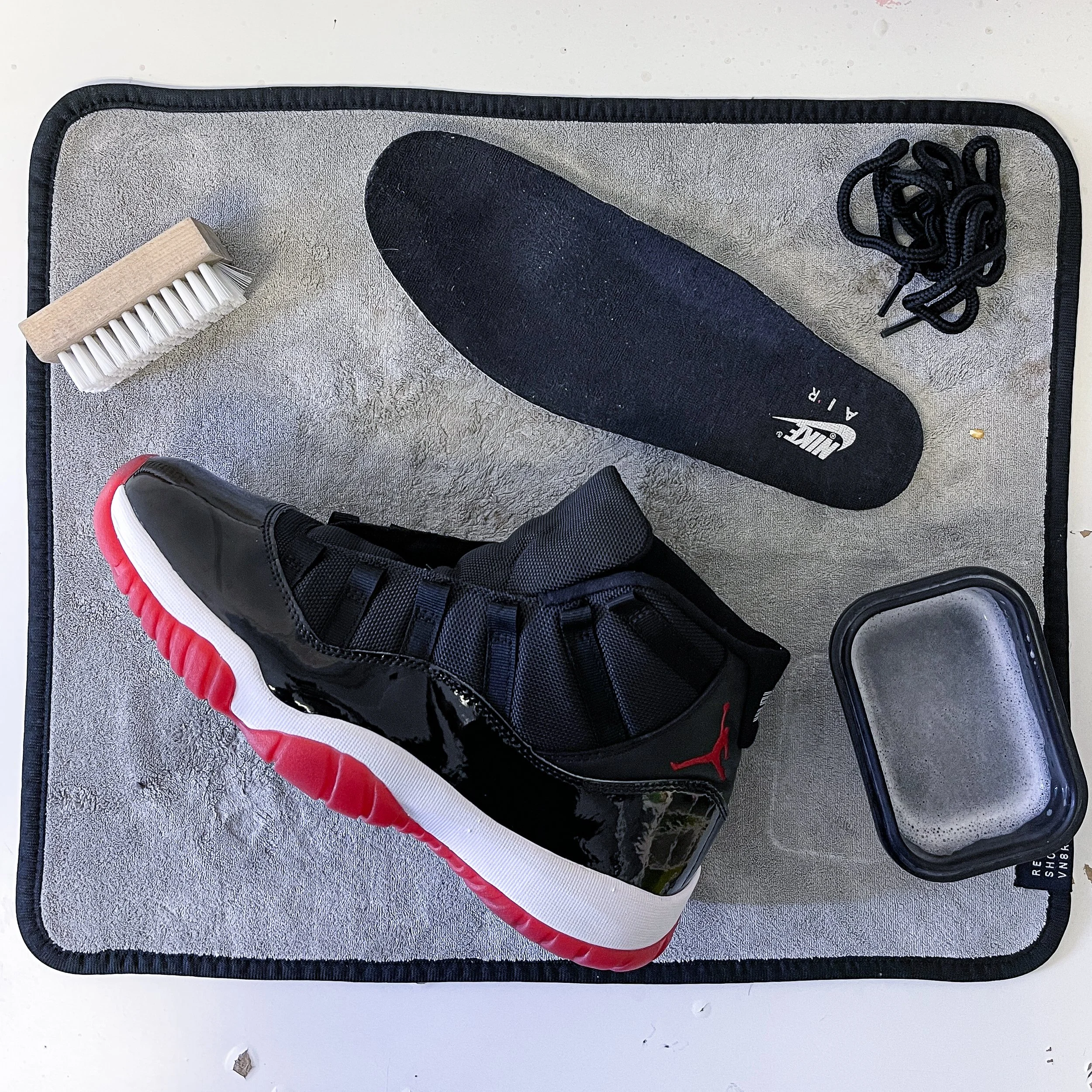
You spray the inside of your sneakers. They smell fresh for a few hours—or maybe even a day.
Then the odor comes back.
Sound familiar?
That is because persistent sneaker odor usually is not just a smell sitting inside the shoe waiting to be covered up. Sweat, moisture, bacteria, dead skin, and everyday wear can build up inside the insoles and lining over time.
A professional sneaker odor removal service takes a different approach. Instead of simply adding fragrance to the inside of the shoe, the goal is to clean the areas where odor-causing buildup accumulates, deodorize the interior, and address the environment that allows odors to keep returning.
At Weekend Ritual, we believe the inside of your sneakers deserves just as much attention as the outside.
Here is why.
Why Do Sneakers Start to Smell?
The obvious answer seems like sweat.
But sweat itself is not usually what creates that unmistakable sneaker odor.
Your feet naturally sweat throughout the day. Once that moisture becomes trapped inside a warm, enclosed sneaker, it creates an environment where bacteria can thrive.
Those bacteria interact with components found in sweat and material left behind from everyday wear, producing compounds that create the odors we associate with sweaty feet and shoes.
Now think about what happens inside your favorite pair after months of wear.
Moisture gets absorbed into the insole.
Sweat reaches the lining.
Dead skin and debris accumulate.
Then the sneakers get taken off, placed in a closet, and worn again the next day before the interior has completely dried.
Repeat that process enough times and the inside of the shoe can become the perfect environment for persistent odor.
That is why a pair can look perfectly clean on the outside and still smell the second you take it off.
Why Sneaker Odor Sprays Usually Aren’t Enough
Odor sprays have their place.
If your sneakers only have a mild temporary smell, a deodorizing product may help freshen them between wears.
The problem starts when fragrance is used as a substitute for cleaning.
Think about spraying air freshener in a room without removing whatever is causing the odor.
For a little while, you smell the fragrance instead.
But the source is still there.
Many sneaker sprays work in a similar way. They can make the inside smell fresher, but if sweat, bacteria, moisture, and residue remain trapped in the insole and lining, the odor can eventually return.
Sometimes combining an existing odor with a strong fragrance can even create an entirely different—and not necessarily better—smell.
Persistent odor requires looking deeper than the scent itself.
What a Professional Sneaker Odor Removal Service Actually Addresses
A sneaker odor removal service should focus on the interior of the shoe, not just spray something inside before returning it to the customer.
At Weekend Ritual, our approach to sneaker care is built around identifying what the pair actually needs.
For sneakers with persistent interior odor, that means paying attention to areas people rarely clean at home:
Insoles
Interior lining
Toe-box interior
Areas underneath removable insoles
Interior seams and edges
Laces
Other areas where sweat and debris can accumulate
Cleaning these areas helps remove the buildup contributing to the problem instead of simply disguising it.
Your Insoles May Be Holding More Than You Think
The insole is one of the first places we look when a customer mentions sneaker odor.
It sits directly underneath your foot for hours at a time.
That means it absorbs sweat, collects debris, and repeatedly experiences the warm, moist conditions created while you wear your sneakers.
Depending on the shoe, some of that moisture can eventually travel beneath the insole as well.
And because most people regularly clean the outside of their sneakers but rarely remove and clean the insoles, that buildup can remain there for months—or even years.
For removable insoles, cleaning both sides and the area underneath them can make a big difference.
But insoles are only part of the equation.
The Sneaker Lining Can Trap Sweat Too
The soft materials around the heel, collar, sides, and toe area come into direct contact with your feet and socks.
These fabrics can absorb moisture just like other textiles.
If you regularly wear a pair for workouts, commuting, long days on your feet, or warm summer days in NYC, the interior can experience considerably more moisture than you might realize.
Simply wiping the exterior does nothing to address that.
This is one reason a sneaker can come out looking brand new after an exterior cleaning while the interior still tells a completely different story.
Deodorizing vs. Sanitizing: What’s the Difference?
These terms are often used interchangeably, but they are not exactly the same thing.
Deodorizing
Deodorizing focuses on reducing or neutralizing unwanted smells.
This can involve products specifically formulated to control odor rather than simply covering it with fragrance.
Deodorizing is useful—but for sneakers with significant buildup, it works best as part of a larger interior cleaning process.
Sanitizing
Sanitizing focuses on reducing microorganisms on a surface.
That distinction matters because microorganisms can contribute to the odor developing inside footwear.
A thorough interior service therefore goes beyond making the sneakers smell better temporarily.
Weekend Ritual's Full Exterior and Interior Deep Clean includes both Interior Sanitation and a Deodorize Treatment, along with detailed cleaning of the rest of the sneaker.
The idea is simple:
Don't just treat the smell. Address the environment creating it.
When Do Your Sneakers Need an Interior Deep Clean?
Not every slightly sweaty sneaker needs the most extensive cleaning service.
Sometimes allowing a pair to dry completely and using a quality deodorizer is enough.
An interior deep clean makes more sense when:
The Odor Keeps Coming Back
If your sneakers smell again shortly after using deodorizing sprays, the source may be deeper in the insole and lining.
You Wear the Same Pair Frequently
Daily sneakers have less time to completely dry between wears, especially if you are walking around NYC for hours every day.
You Work Out in Them
Running, training, basketball, and other activities create considerably more moisture inside footwear.
The Insoles Are Visibly Dirty
If you remove the insole and notice darkened areas, staining, residue, or heavy buildup, freshening spray alone probably is not enough.
You Bought the Sneakers Pre-Owned
Cleaning the outside of a secondhand sneaker addresses appearance.
Cleaning the interior addresses the part someone else actually wore.
For pre-owned sneakers, we strongly recommend considering an interior deep clean before putting them into regular rotation.
The Shoes Have Been Stored for a Long Time
Sneakers sitting in storage can develop stale or musty odors, particularly if they were put away before completely drying.
You Can Smell Them Without Wearing Them
If opening the box or picking up the sneaker is enough to notice the odor, it is probably time to go beyond basic deodorizing.
Can You Remove Sneaker Odor Permanently?
There is an important distinction here.
Professional cleaning can significantly improve odor that is coming from accumulated sweat, bacteria, debris, and other interior buildup.
But no sneaker cleaning service can permanently prevent a shoe from ever developing odor again.
The moment you start wearing the sneakers, they begin collecting new moisture and debris.
The better goal is to reset the interior and then maintain it properly.
After an interior cleaning, you can help keep sneakers fresher by allowing them to dry thoroughly between wears, rotating pairs instead of wearing the same sneakers every day, keeping socks and feet clean and dry, and occasionally removing insoles to allow additional airflow.
Maintenance matters.
Why We Don't Recommend Soaking Your Sneakers
When people discover that their insoles and lining need cleaning, another common reaction is:
"I'll just throw them in the washing machine."
We don't recommend that as a one-size-fits-all solution.
Sneakers can contain leather, suede, mesh, foam, adhesives, painted surfaces, specialty fabrics, and other materials—all in a single pair.
Completely saturating a sneaker can create unnecessary risk, especially on older or premium footwear.
At Weekend Ritual, we hand-clean sneakers so the treatment can be adjusted for the specific materials and condition of the shoe.
The goal is not to use as much water or cleaning solution as possible.
The goal is to clean effectively while minimizing unnecessary stress on the sneaker.
Exterior Cleaning vs. Interior Cleaning
If the outside of your sneaker is dirty but the inside is still fresh, you probably do not need an interior deep clean.
That is why Weekend Ritual offers different levels of cleaning rather than automatically putting every sneaker through the same process.
But if your sneaker has visible exterior dirt and persistent interior odor, our Full Exterior and Interior Deep Clean is designed for both.
The service includes detailed cleaning of the:
Uppers
Midsoles
Undersoles
Laces
Insoles
Interior lining
It also includes interior sanitation and deodorizing treatment.
You get a complete cleaning of the parts everyone sees—and the parts they don't.
Sneaker Odor Removal Service in NYC
When your sneakers smell, buying another spray may seem like the easiest solution.
But if you have already tried deodorizing products and the odor continues to return, it may be time to address what is happening deeper inside the shoe.
Weekend Ritual provides professional sneaker cleaning with free pickup and delivery throughout Manhattan, Brooklyn, and Queens, along with mail-in sneaker cleaning for customers throughout the United States.
Every pair is cleaned by hand and treated according to its materials, condition, and cleaning needs.
If odor is the issue, don't just cover it up.
Clean what is causing it.
Book Weekend Ritual's Full Exterior and Interior Deep Clean →
Live your life. We'll clean your kicks.
Frequently Asked Questions About Sneaker Odor Removal
Why do my sneakers still smell after I spray them?
A deodorizing spray may temporarily mask or neutralize odor, but sweat and buildup can remain trapped in the insole and interior lining. If the source is not addressed, the odor may return.
Can sneaker odor actually be removed?
Persistent odor can often be significantly improved through thorough interior cleaning, deodorizing, drying, and sanitation. Results depend on the shoe, its materials, its condition, and how long the buildup has been present.
Does professional sneaker cleaning clean the inside too?
It depends on the service. Weekend Ritual's Basic, Deep Clean, and Full Exterior services focus primarily on exterior areas. Our Full Exterior and Interior Deep Clean includes detailed cleaning of the inside of the sneaker along with interior sanitation and deodorizing.
Should I clean the insoles of my sneakers?
Yes. Insoles sit directly underneath your feet and can absorb sweat and collect debris. When appropriate for the material, cleaning the insoles is an important part of addressing persistent sneaker odor.
Should I remove my sneaker insoles to let them dry?
If the insoles are designed to be removable, taking them out occasionally can improve airflow and help the shoe dry more thoroughly before the next wear.
Can I put smelly sneakers in the washing machine?
We generally recommend a material-specific approach instead. Sneakers can combine multiple materials, adhesives, paints, and finishes that may not respond well to machine washing or complete saturation.
Do pre-owned sneakers need interior cleaning?
If you purchase used sneakers, an interior deep clean is worth considering. Even when a pair looks clean externally, the insoles and lining have been in prolonged contact with the previous owner's feet and can contain accumulated sweat and debris.
Yellow Sneaker Soles: Can They Be Restored or Are They Permanent?
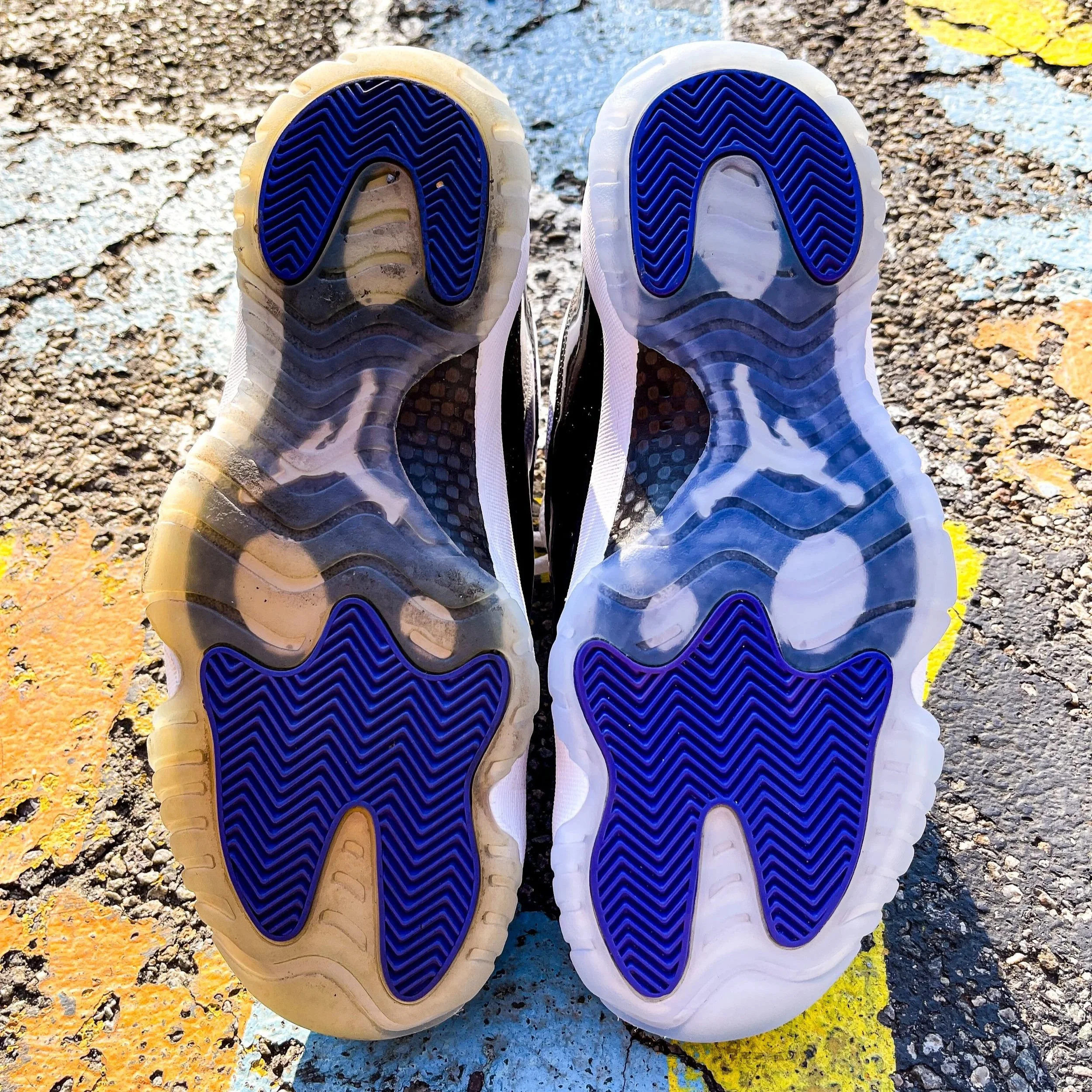
You pull an older pair of sneakers out of the box and everything still looks great—except the soles have turned yellow.
Maybe they are Air Jordan 11s with once-icy outsoles. Maybe a white midsole has developed a cream-colored tint. Or maybe the sneakers have barely been worn at all, yet the soles look years older than the uppers.
The first instinct is usually to clean them.
But yellow sneaker soles are not always dirty.
In many cases, the discoloration is caused by oxidation, a chemical aging process happening within the sole material itself. That distinction matters because ordinary sneaker cleaner, soap, and scrubbing may remove grime, but they cannot simply wash oxidation away.
A professional sole de-yellowing service NYC sneaker owners use for oxidized soles approaches the problem differently. Instead of treating the discoloration like surface dirt, de-yellowing uses a controlled treatment designed to reduce the yellow appearance and bring the sole closer to its original look.
The important word, however, is closer.
Not every yellow sole can—or should—be restored to factory white.
Here is what sneaker owners should know before attempting to de-yellow a pair.
Is It Dirt or Oxidation?
Before treating a yellow sole, the first step is figuring out why it looks yellow in the first place.
Surface Dirt
Dirt, street grime, oils, dust, and residue sit primarily on the surface of the sneaker.
These contaminants can usually be loosened using the appropriate sneaker-cleaning solution, brushes, controlled moisture, and hand-cleaning techniques.
If a white midsole looks beige because it has collected months of NYC street grime, a professional deep cleaning may dramatically improve it without any type of de-yellowing treatment.
Oxidation
Oxidation is different.
Sneaker soles are made from materials such as rubber, polyurethane, EVA, TPU, and other synthetic compounds. Over time, exposure to oxygen, light, heat, and environmental conditions can contribute to chemical changes within those materials.
One visible result can be yellowing.
That is why an older sneaker can develop yellow soles even if the shoe spends most of its life sitting in a box.
If a sole remains yellow after the surface has been thoroughly cleaned, oxidation may be the reason.
And once the discoloration is occurring within the material rather than sitting on top of it, more soap and harder scrubbing are not the answer.
Why Soap Alone Cannot Fix Oxidized Sneaker Soles
One of the biggest mistakes we see in sneaker care is continuing to scrub a sole after the dirt has already been removed.
Think about the difference between cleaning a dirty white T-shirt and trying to reverse the yellowing of an old piece of plastic.
The first is primarily a cleaning problem.
The second involves the material itself changing over time.
Oxidized sneaker soles fall closer to the second category.
A cleaning solution can remove substances sitting on the surface. It cannot simply scrub away a chemical color change that has developed within the sole.
Excessive scrubbing can also create new problems. Depending on the sneaker, aggressive cleaning may dull finishes, wear away painted areas, damage aging rubber, or create uneven-looking sections.
At Weekend Ritual, this is why we separate cleaning from restoration treatments.
The goal is not to use the strongest possible process.
The goal is to identify what the sneaker actually needs.
How a Professional Sole De-Yellowing Service NYC Works
Professional de-yellowing is a multi-step process rather than one aggressive treatment.
Although the exact approach depends on the sneaker and sole material, the process generally includes several important stages.
1. Evaluate the Condition of the Sole
Before treatment begins, the sole should be inspected for more than color.
We look at factors such as:
How severe the yellowing has become
Whether the sole is clear, translucent, white, painted, or colored
The age of the sneaker
Existing cracking or brittleness
Separation around the sole
Painted graphics or details near the treatment area
Previous restoration attempts
This evaluation helps determine whether de-yellowing is appropriate and what level of improvement is realistic.
2. Clean the Sole First
De-yellowing should not be performed over layers of dirt.
The sneaker is first cleaned to remove surface contamination so the remaining discoloration can be properly evaluated.
Sometimes this step reveals that part of what appeared to be oxidation was actually embedded grime.
It also gives the treatment more consistent contact with the areas that actually need attention.
3. Protect Surrounding Materials
This is one of the biggest differences between controlled sneaker restoration and randomly trying a viral DIY method.
De-yellowing treatments should not simply be spread across the entire shoe.
Leather, suede, mesh, painted sections, logos, adhesives, and other materials may react differently to restoration products.
Areas that should not be treated need to be protected before the process begins.
4. Apply a Controlled De-Yellowing Treatment
A professional treatment is applied specifically to the oxidized areas.
The objective is to reduce the compounds responsible for the visible yellow appearance without unnecessarily exposing the rest of the sneaker.
5. Use Controlled UV Exposure
Many de-yellowing processes combine a specialized treatment with ultraviolet light.
At Weekend Ritual, controlled UV exposure allows us to work on the sole in monitored treatment sessions rather than leaving the entire sneaker outside in unpredictable sunlight.
The pair can be checked throughout the process so treatment can be adjusted based on how the material responds.
6. Inspect the Results Before Repeating
Severely oxidized soles may require more than one treatment cycle.
That does not mean continuously treating the sneaker until it becomes perfectly white.
There is a point where chasing an additional few percentage points of improvement may create more risk than benefit.
Professional restoration means knowing when to continue—and when to stop.
Which Sneaker Soles Respond Best to De-Yellowing?
Some soles are better candidates than others.
Clear and “Icy” Soles
Translucent soles are some of the most noticeable when oxidation begins because their original clear or blue-tinted appearance gradually becomes yellow or amber.
Certain Air Jordan models are well known for this.
Moderate oxidation on otherwise healthy translucent soles can often show a noticeable cosmetic improvement after controlled treatment.
White Rubber Sections
Some white rubber sole components can also respond well when the discoloration is genuinely oxidation rather than staining or material damage.
The specific rubber compound and age of the shoe will influence the results.
Lightly to Moderately Oxidized Soles
As with most restoration work, earlier intervention generally provides more options than waiting until the material is extremely aged.
A sole with moderate yellowing and good structural integrity is usually a better candidate than a severely oxidized sole that has also become brittle, cracked, or separated.
When De-Yellowing May Not Be the Right Solution
Not every yellow sneaker needs—or can tolerate—a de-yellowing treatment.
Several situations require additional caution.
Painted Midsoles
If the yellow appearance is actually discoloration or deterioration of painted material, chemical de-yellowing may not be the proper solution.
Repainting or another restoration method may be needed instead.
Severe Material Deterioration
Color is only cosmetic.
If an older sole is cracking, crumbling, separating, or becoming structurally unstable, making it whiter does not repair those problems.
A sneaker can look better while still having an aging sole underneath.
Uneven Previous DIY Treatments
Sneakers that have already gone through multiple aggressive home treatments may respond unpredictably.
Some sections may have already been overexposed while others remain heavily oxidized.
Deep or Permanent Discoloration
There are situations where the material has aged to the point that only limited cosmetic improvement is realistic.
A responsible sneaker-care professional should tell you that before treatment rather than promising a perfect result.
Can Yellow Sneaker Soles Be Restored to Factory White?
Sometimes the improvement can be dramatic.
But factory white should never be guaranteed.
Every sneaker ages differently.
Two identical pairs manufactured during the same year can respond differently depending on how they were worn, stored, exposed to heat or sunlight, and treated throughout their lives.
Our goal at Weekend Ritual is improvement, not unrealistic promises.
A sole that begins treatment heavily yellowed may finish significantly brighter without becoming identical to a brand-new sole.
That can still make a major difference in the overall appearance of the sneaker.
Is Sneaker De-Yellowing Permanent?
Usually, no.
Even after successful treatment, the materials in the sneaker continue to age.
Oxidation can gradually return over time.
Think of de-yellowing as restoring the appearance of an aging material rather than permanently stopping the aging process.
How quickly yellowing returns depends on the material and how the sneaker is stored and worn.
Keeping sneakers away from excessive heat and prolonged direct sunlight can help slow future discoloration, but no storage method can completely stop materials from aging.
What Are the Risks of DIY Sole De-Yellowing?
There are countless sneaker de-yellowing tutorials online, and some people get good results at home.
The problem is that the same technique does not behave identically on every shoe.
Potential problems include:
Uneven whitening
Bleaching surrounding materials
Damage to painted sections
Discoloration of the upper
Product getting into seams or adhesives
Over-treating already aged materials
Creating noticeably different shades across the sole
Older and valuable sneakers deserve additional caution because there may be very little room for error.
The goal should never be to make a treatment as strong as possible.
It should be to use the least aggressive process necessary to achieve a meaningful improvement.
Cleaning vs. De-Yellowing: Which Does Your Pair Need?
A simple way to think about it is:
If the discoloration is sitting on the sole, cleaning may remove it.
If the sole material itself has changed color, de-yellowing may be necessary.
And sometimes a sneaker needs both.
At Weekend Ritual, we clean the sneaker first and evaluate what remains rather than automatically assuming every off-white sole needs restoration.
That approach helps prevent unnecessary treatments and gives customers a more realistic understanding of what their pair actually needs.
Professional Sole De-Yellowing in NYC
Yellow soles do not automatically mean your sneakers are finished.
For the right pair, controlled de-yellowing can make an aging sneaker look dramatically fresher and bring clear or white sole components much closer to their original appearance.
But restoration begins with understanding the material—not simply applying chemicals and hoping for the best.
Weekend Ritual specializes in detailed sneaker care for customers throughout New York City, including Manhattan, Brooklyn, and Queens. Each pair is evaluated individually so we can determine whether cleaning, de-yellowing, or another sneaker restoration service makes the most sense.
Because sometimes your sneakers do not need to be replaced.
They just need a second chance.
Ready to see what can be restored?
Book your Weekend Ritual sneaker service and let us evaluate your pair.
Live your life. We’ll clean your kicks.
Frequently Asked Questions About Yellow Sneaker Soles
Can yellow sneaker soles really become clear again?
Oxidized translucent soles can often become noticeably clearer through professional de-yellowing, but results depend on the age, material, and severity of oxidation. Completely restoring every sole to its original factory appearance cannot be guaranteed.
Why did my sneaker soles turn yellow even though I never wore them?
Wear is not required for oxidation to occur. Sneaker materials continue aging while stored, and exposure to oxygen, light, heat, and time can gradually change their appearance.
Will professional sneaker cleaning remove yellow soles?
Cleaning can remove dirt and surface staining. If the yellow color is caused by oxidation within the sole material, a separate de-yellowing treatment may be necessary.
How many de-yellowing treatments does a sneaker need?
It varies. Some soles respond noticeably after one treatment cycle, while more advanced oxidation may require multiple controlled sessions. The condition of the material should determine how aggressively the process is continued.
Can old Jordans with yellow icy soles be restored?
Many Jordan models with translucent or icy soles can be candidates for de-yellowing. The age and structural condition of the sole still need to be evaluated before treatment.
Does de-yellowing damage sneakers?
Any restoration process carries some risk, especially on older sneakers. Proper material evaluation, protection of surrounding areas, controlled treatment, and monitored UV exposure help reduce those risks.
Can Suede and Nubuck Sneakers Be Professionally Cleaned?
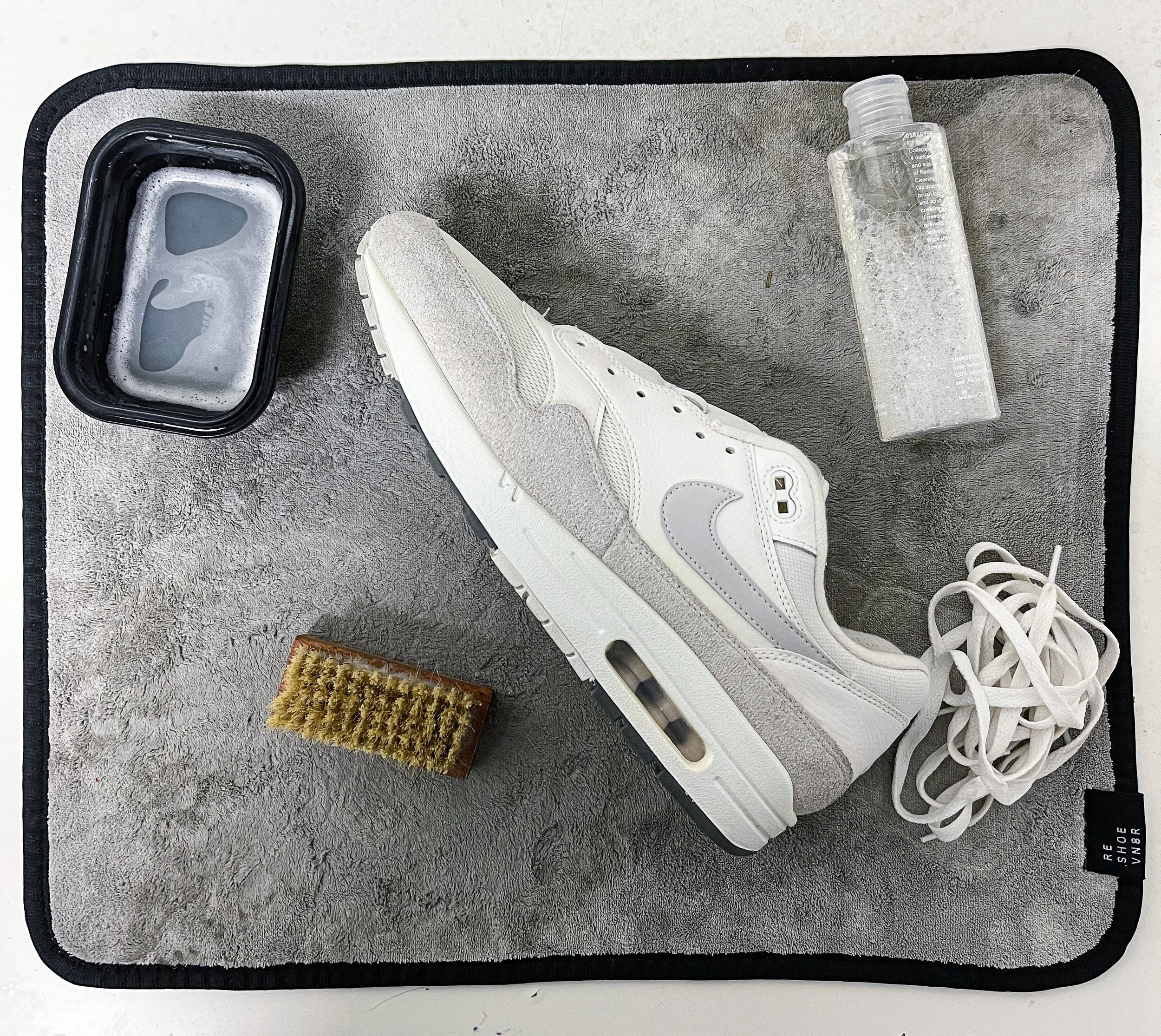
If you have ever gotten caught in the rain wearing suede sneakers or discovered a dark stain on a pair of nubuck Jordans, you probably know how intimidating these materials can be to clean. One wrong move can leave behind watermarks, faded color, flattened fibers, or a stain that looks worse than when you started.
The good news is that suede and nubuck sneakers can be professionally cleaned. The key is knowing how these materials react to moisture, friction, cleaning products, and drying.
At Weekend Ritual, our suede sneaker cleaning service is approached differently from cleaning standard leather, canvas, or mesh sneakers. Instead of saturating the material and aggressively scrubbing it, suede cleaning requires controlled moisture, proper brushes, careful stain treatment, and an understanding of when leaving a minor imperfection alone is safer than continuing to work the material.
Here's what sneaker owners should know before having a suede or nubuck pair professionally cleaned.
Why Is Suede So Difficult to Clean?
Suede is made from the underside of animal hide, giving it the soft, textured surface known as the nap.
That texture is also what makes suede challenging.
Unlike smooth leather, where dirt often sits primarily on the surface, contaminants can become trapped between suede fibers. Moisture can change the direction and texture of those fibers, while aggressive cleaning can flatten them.
Suede can also react unpredictably to water.
Applying too much moisture to one concentrated area may create a visible boundary between the wet and dry portions of the shoe. This is one of the ways watermarks develop.
That is why simply grabbing a wet brush and sneaker cleaner can be risky.
Professional suede cleaning is less about using more cleaning solution and more about controlling exactly how the material is treated.
What Does a Professional Suede Sneaker Cleaning Service Actually Do?
A professional suede sneaker cleaning service should evaluate the sneaker before deciding how aggressively it can be cleaned.
At Weekend Ritual, the condition of the material matters just as much as the amount of dirt.
We look at factors such as:
The type and condition of the suede or nubuck
Whether the color appears stable
Existing watermarks
Oil or grease stains
Dirt embedded in the nap
Areas where the nap has become flattened
Previous cleaning attempts
Dye transfer or potential color bleeding
The construction of surrounding materials
That assessment determines how the pair should be approached.
There is no universal cleaning method that should be used on every suede sneaker.
Watermarks on Suede Sneakers
Watermarks are one of the most common reasons customers look for professional suede cleaning.
Ironically, watermarks are also one of the reasons suede must be cleaned carefully.
When only one portion of suede becomes wet, the fibers and dye in that area may dry differently than the surrounding material. This can leave behind rings, darker patches, or uneven coloration.
Correcting a watermark may require controlled and evenly distributed moisture rather than concentrating additional cleaner directly on the visible mark.
The goal is to avoid creating an even stronger contrast between treated and untreated areas.
Depending on the suede, age of the sneaker, severity of the watermark, and previous damage, significant improvement may be possible without guaranteeing that every mark will completely disappear.
Can Oil Stains Be Removed From Suede?
Oil is particularly difficult because suede is porous.
Instead of remaining on the surface, oil can penetrate deeper into the material.
The sooner an oil stain is addressed, the better the chances of improving it. Older stains may have already bonded with the fibers or permanently darkened the material.
Professional treatment typically focuses on drawing contaminants away from the fibers while minimizing unnecessary moisture and friction.
One of the biggest mistakes sneaker owners make is repeatedly scrubbing an oil stain because it still looks dark.
More scrubbing does not necessarily mean more cleaning.
On suede, excessive friction can damage the nap before the stain itself disappears.
Sometimes the professional decision is knowing when to stop.
What Is Flattened Suede Nap?
If your suede sneakers suddenly look smooth, shiny, or darker in certain areas, the suede may not actually be permanently discolored.
The nap may simply be flattened.
The direction of suede fibers changes how light reflects off the material. That means two sections of identical suede can appear to be different colors simply because the fibers are lying differently.
This is why brushing is an important part of professional suede care.
Once the sneaker has been cleaned and properly dried, the fibers can often be carefully lifted and repositioned using brushes designed for suede.
This can dramatically improve the appearance and texture of the material.
But brushing also requires control.
Using the wrong brush—or applying too much pressure—can create unnecessary wear or permanently alter delicate suede.
Color Bleeding and Fading
Color stability is another major consideration when cleaning suede.
Certain dyed suede materials can release pigment when exposed to moisture or cleaning solutions.
Dark reds, blues, blacks, and heavily saturated colors can be particularly unforgiving.
This is why testing and controlled moisture are important before cleaning an entire sneaker.
A professional cleaner should also recognize the difference between dirt and permanent color loss.
Cleaning can remove contaminants.
Cleaning cannot always replace pigment that has already faded from UV exposure, wear, chemical damage, or previous cleaning.
That distinction matters because continuing to clean an area that is actually faded will not restore the missing color—and could potentially make the material worse.
Suede vs. Nubuck: What's the Difference?
Suede and nubuck are often grouped together because both have a textured finish, but they are not exactly the same.
Suede is generally produced from the inner surface of the hide, while nubuck is created by sanding or buffing the outer surface.
Nubuck typically has a finer, shorter nap and can feel slightly smoother.
Both materials are sensitive to improper cleaning, however, and many of the same precautions apply.
Water saturation, aggressive brushes, harsh chemicals, and improper drying can affect both suede and nubuck sneakers.
For the customer, the important takeaway is simple:
If the material feels soft, velvety, or brushed, do not automatically treat it like standard leather.
Why Controlled Moisture Matters
One of the biggest misconceptions about professional sneaker cleaning is that a deeper clean automatically means using more water.
With suede, that can be the opposite of what you want.
Professional cleaning involves controlling moisture instead of unnecessarily soaking the sneaker.
Using too much water can contribute to:
Watermarks
Dye migration
Stiffening
Uneven texture
Changes in the nap
Extended drying times
Potential adhesive issues
The amount of moisture used should depend on the material and the condition of the sneaker.
That is very different from throwing the pair into a washing machine or completely saturating it with a generic sneaker cleaning solution.
The Right Brush Makes a Difference
Not every sneaker brush belongs on suede.
A brush that works perfectly on a rubber outsole may be far too aggressive for a delicate upper.
Professional sneaker cleaning involves changing tools depending on the material being treated.
During suede care, different brushes may be used to loosen dry dirt, clean the material, and eventually restore the direction and texture of the nap.
The goal is not simply to scrub until the sneaker looks clean.
It is to remove as much contamination as safely possible while preserving the material underneath.
What Suede Sneakers Should Never Go Through
Some cleaning methods are simply too risky for suede and nubuck.
We recommend avoiding:
Washing machines: Excessive water, detergent, agitation, and spinning can alter suede and potentially affect the sneaker's structure.
Hair dryers and direct heat: Trying to speed up drying with high heat can stiffen materials and potentially affect adhesives.
Aggressive household stain removers: A product designed to remove stains from clothing or hard surfaces may discolor or damage suede.
Heavy scrubbing: Repeatedly attacking one spot can permanently flatten or wear away the nap.
Random internet hacks: Vinegar, dish soap, baking soda, alcohol, and other household products may work in very specific situations, but experimenting on an expensive sneaker is a risky way to find out how your particular suede reacts.
When dealing with delicate materials, the safest cleaning method is usually the one that introduces the least unnecessary risk.
Realistic Expectations for Professional Suede Sneaker Cleaning
A trustworthy sneaker cleaner should never guarantee that every suede sneaker will return to factory-new condition.
There are important differences between dirt, staining, fading, wear, and permanent material damage.
Professional cleaning can often significantly improve:
Surface dirt
Embedded grime
Mild watermarks
Certain stains
Flattened nap
Dirty midsoles
Dirty laces
Overall appearance
However, cleaning may not completely reverse:
Permanent dye loss
Severe oil penetration
Bleached areas
Physical wear to the suede
Bald spots where fibers are missing
Deep scratches
Significant color transfer
Damage caused by previous cleaning attempts
At Weekend Ritual, part of properly caring for sneakers is knowing when additional cleaning would create more risk than improvement.
Sometimes protecting the remaining material is more important than chasing the final 5% of a stain.
What Weekend Ritual Looks for When Cleaning Suede
Our approach to suede cleaning is based around preserving the material first and improving its appearance second.
When working on suede pairs, we pay close attention to how the material changes throughout the cleaning and drying process.
A pair can look darker while damp, the nap can temporarily lie flat after treatment, and the final appearance should not be evaluated until the sneaker has properly dried and the fibers have been worked back into position.
That process is one reason professional suede results cannot be judged halfway through a cleaning.
The transformations we aim for at Weekend Ritual are not about covering problems with dye or making unrealistic promises. They come from removing accumulated dirt, carefully treating problem areas, cleaning the surrounding components, allowing the sneaker to dry correctly, and restoring the suede's texture wherever the material allows.
The result is often a pair that looks dramatically cleaner, more even, and much more wearable without unnecessarily compromising the original material.
Should You Clean Suede Sneakers Yourself or Hire a Professional?
Light maintenance can absolutely be done at home.
If your sneakers only have loose surface dirt, gently using an appropriate suede brush may be enough to keep the material looking good.
Professional cleaning becomes more valuable when you are dealing with:
Visible staining
Oil or grease
Watermarks
Expensive or limited-edition sneakers
Multiple materials on one shoe
Significant embedded dirt
Color bleeding concerns
A previous cleaning attempt that made the problem worse
The cost of professional cleaning can be especially worthwhile when the alternative is experimenting on a sneaker that would be expensive—or impossible—to replace.
Looking for Suede Sneaker Cleaning in NYC?
Suede does not have to stay in the closet because you are afraid of getting it dirty.
It simply needs to be cleaned differently.
Weekend Ritual provides professional sneaker cleaning for suede, nubuck, leather, mesh, canvas, and mixed-material sneakers throughout New York City. Every pair is hand-cleaned with the cleaning method adjusted to the materials and condition of the sneaker.
With convenient pickup and delivery available in NYC, you can get your suede sneakers professionally cleaned without having to experiment with risky DIY methods.
Live your life. We'll clean your kicks.
Ready to Clean Your Suede Sneakers?
If your suede or nubuck sneakers have watermarks, stains, embedded dirt, or flattened nap, let Weekend Ritual take a look.
Sneaker Cleaning vs Restoration: Which Service Does Your Pair Need?
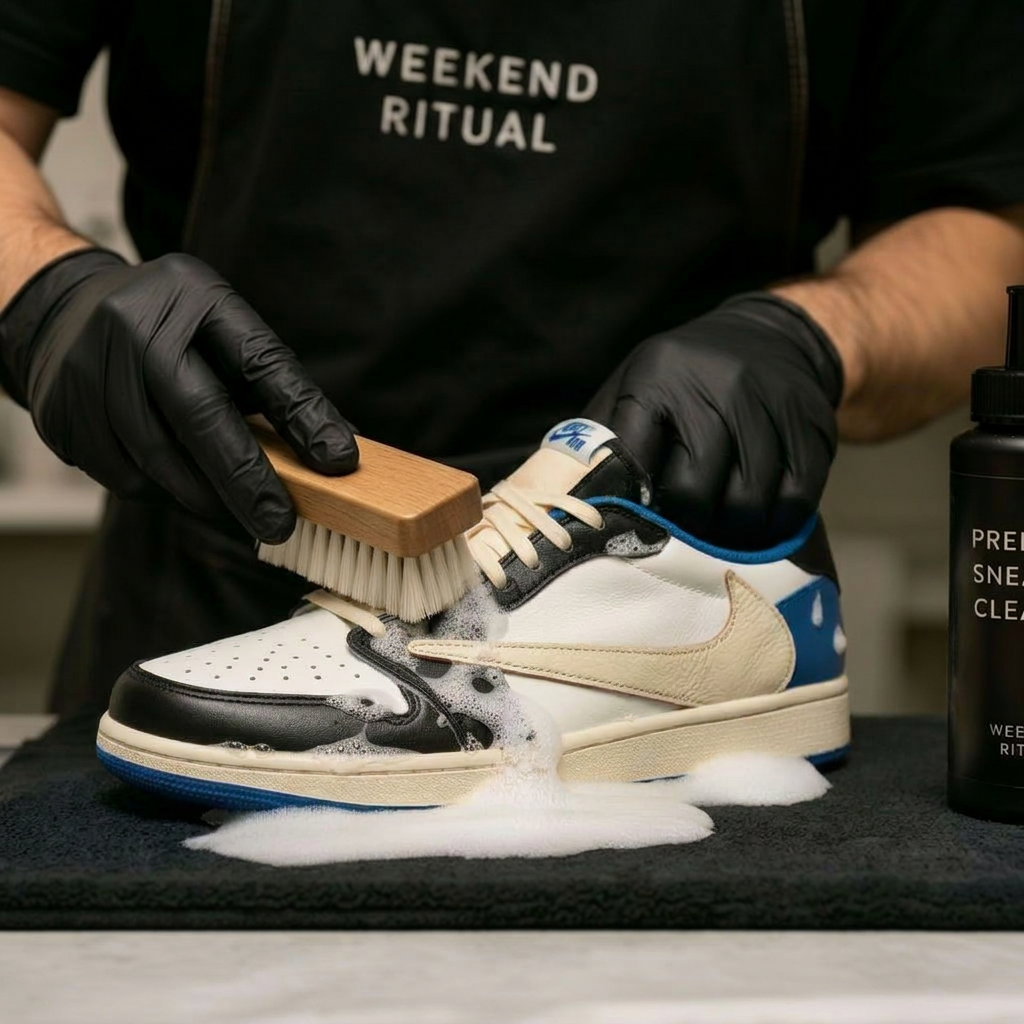
When your sneakers are dirty, stained, yellowed, faded, or simply looking worn, it can be difficult to know what service they actually need. Understanding sneaker cleaning vs restoration can help you avoid paying for unnecessary work—or expecting a standard cleaning to correct damage that requires a more advanced repair.
At Weekend Ritual, we work with sneakers in a wide range of conditions, from lightly worn everyday pairs to heavily used sneakers that need more than soap, water, and stain treatment. One of the most important parts of professional sneaker care is knowing the difference between something that is dirty and something that is actually damaged.
Cleaning is primarily about removing contaminants and improving the appearance of the materials already there. Restoration involves repairing, replacing, repainting, or correcting parts of the sneaker that have deteriorated.
Here’s how to tell which service your pair needs.
Sneaker Cleaning vs Restoration: What’s the Difference?
The simplest difference is this:
Sneaker cleaning removes dirt, stains, grime, and odor. Sneaker restoration repairs or corrects damage, deterioration, discoloration, or missing material.
A sneaker can look dramatically different after a professional cleaning, but cleaning has limits. If paint has worn away, a sole is separating, leather is cracked, or a material has permanently changed color, removing dirt alone will not return the sneaker to its original condition.
That is where restoration comes in.
What Professional Sneaker Cleaning Can Fix
Professional sneaker cleaning focuses on safely removing grime buildup without unnecessarily altering the sneaker's original materials.
Depending on the sneaker and service level, cleaning can include the upper, midsoles, laces, undersoles, insoles, interior lining, and other areas of the shoe.
Dirt and Surface Grime
Everyday dirt is one of the most common issues we see.
Dust, sidewalk grime, mud, spills, and general wear can gradually dull a sneaker's appearance. White midsoles can turn gray, textured uppers can collect dirt, and outsole grooves can fill with debris.
In most cases, these problems require cleaning rather than restoration.
Example: A pair of white leather Air Force 1s has dirty uppers, gray midsoles, and stained laces, but the leather and paint are still intact.
What it needs: A professional deep cleaning.
Stain Treatment
Some sneakers are technically clean but still have visible stains.
Stain treatment goes beyond basic surface cleaning and targets discoloration caused by substances such as mud, food, beverages, oils, or other contaminants.
The type of material matters significantly. A stain on leather may require a completely different process than the same stain on mesh, suede, knit, or nubuck.
Professional stain treatment should always prioritize the integrity of the material. Aggressively scrubbing a stain or using strong household chemicals can sometimes cause more damage than the original stain.
Example: A mesh running sneaker has a dark stain across the toe box, but the material itself has not torn or faded.
What it needs: Deep cleaning with targeted stain treatment.
Interior Cleaning and Odor Removal
Sweat, bacteria, dirt, and repeated wear can also affect the inside of a sneaker.
Exterior cleaning alone may make a pair look better without addressing odor or interior buildup. A more comprehensive cleaning can include the insoles, interior lining, and deodorizing treatment.
This is still considered sneaker cleaning because no damaged components are being rebuilt or replaced.
When Sneaker Cleaning Is Enough
Cleaning is usually the right choice when the sneaker is structurally sound and the original materials are still intact.
Your sneakers likely need cleaning if:
The uppers are dirty but not damaged.
The midsoles have surface grime.
The laces are stained.
Dirt is embedded in mesh or textured materials.
Suede or nubuck looks dirty or matted but is not severely damaged.
The undersoles have accumulated dirt.
The interior needs cleaning or deodorizing.
Stains are sitting on top of otherwise healthy material.
A good rule of thumb is that if the problem was caused by something being added to the sneaker—dirt, mud, grime, spills, or odor—cleaning may be enough.
If something has been lost or damaged—paint, adhesive, material, shape, or structure—restoration may be necessary.
What Is Sneaker Restoration?
Sneaker restoration involves correcting issues that cannot be solved through cleaning alone.
Depending on the condition of the sneaker, restoration may include repainting, sole repair, de-yellowing, material correction, adhesive work, or structural repairs.
Restoration can range from a relatively small cosmetic correction to a highly detailed rebuild of an older or badly damaged pair.
Repainting and Color Restoration
One of the clearest examples of the difference between sneaker cleaning and restoration is worn paint.
Cleaning can remove dirt sitting on top of paint. It cannot replace paint that is no longer there.
Painted midsoles and leather panels can eventually become scratched, chipped, faded, or worn through normal use.
Example: A pair of Jordan 4s has been cleaned thoroughly, but sections of black midsole paint are chipped away and the original surface underneath is visible.
What it needs: Repainting or paint restoration.
Before repainting, the sneaker generally needs to be properly cleaned and prepared so the new finish can adhere correctly.
This is why cleaning is often part of the restoration process, even though the two services are not the same.
De-Yellowing
Yellowing is another area where customers sometimes expect more from traditional sneaker cleaning than it can realistically provide.
Certain clear or translucent sneaker components can yellow over time because of oxidation, UV exposure, age, heat, and environmental conditions.
A standard cleaning can remove dirt sitting on the surface, but it cannot always reverse chemical discoloration within the material itself.
That requires a specialized de-yellowing or oxidation treatment.
Example: A pair of Jordan 11 Concords has clean translucent soles, but the soles remain noticeably yellow after the dirt has been removed.
What it needs: De-yellowing rather than additional scrubbing.
It is also important to recognize that de-yellowing results can vary depending on the sneaker's age, material, previous treatments, and level of oxidation. Professional sneaker care should never promise that every aged sole can be returned to factory-new transparency.
Sole Repair and Separation
If your sole is separating from the upper, cleaning will not solve the problem.
Sole separation can happen because of age, repeated wear, heat exposure, moisture, or deterioration of the original factory adhesive.
Depending on the sneaker and extent of the damage, restoration may involve removing deteriorated adhesive, preparing the surfaces, applying appropriate replacement adhesive, and carefully bonding the sneaker back together.
Example: An older pair of Jordans looks relatively clean, but the midsole begins pulling away from the upper near the toe.
What it needs: Sole repair or regluing.
Continuing to wear a separating sneaker can sometimes make the damage worse, so structural problems should be addressed before worrying about cosmetic cleaning.
Structural Sneaker Restoration
Structural restoration is usually the most advanced category of sneaker repair.
This can include problems such as:
Major sole separation
Damaged or deteriorating midsoles
Torn materials
Detached panels
Broken or missing components
Severe cracking
Foam deterioration
Damage caused by age or improper storage
Vintage sneakers can be particularly challenging because the sneaker may appear wearable while internal materials have already begun to deteriorate.
A sneaker that is 15 or 20 years old may therefore need to be evaluated differently from a current pair with similar visible wear.
Cleaning vs Restoration Examples
Here are a few common scenarios.
Dirty White Leather Sneakers
Condition: Dirt on the upper, gray midsoles, dirty laces, light scuffing.
Service: Cleaning.
If the leather coating and midsole paint remain intact, a deep cleaning may dramatically improve the appearance without restoration.
Heavily Stained Mesh Sneakers
Condition: Dirt and stains embedded throughout a light-colored mesh upper.
Service: Deep cleaning and stain treatment.
Because the original material remains intact, restoration usually isn't necessary unless the staining has permanently altered the material.
Chipped Jordan Midsole Paint
Condition: The sneaker is clean, but painted areas of the midsole are peeling or missing.
Service: Restoration.
Cleaning may be performed first, but repainting is required to replace the missing finish.
Yellowed Icy Soles
Condition: The outsole has been thoroughly cleaned but remains yellow.
Service: De-yellowing.
The problem is oxidation rather than surface dirt.
Separating Vintage Sneakers
Condition: The sneaker looks relatively clean, but the sole is pulling away from the upper.
Service: Structural restoration or sole repair.
Cleaning alone cannot repair weakened adhesive or deteriorated components.
Dirty Suede Sneakers
Condition: Suede looks darker, dusty, and matted, but there are no tears or major areas of permanent fading.
Service: Professional cleaning.
Suede requires controlled moisture, softer tools, and material-specific techniques, but it does not automatically require restoration simply because it looks worn.
Can a Sneaker Need Both Cleaning and Restoration?
Absolutely.
In fact, many restoration projects begin with a thorough cleaning.
Imagine a pair of older Jordans with dirty uppers, stained laces, yellowed soles, and chipped midsole paint.
That sneaker may require:
Deep cleaning
Stain treatment
De-yellowing
Midsole repainting
Cleaning prepares the sneaker and reveals what damage remains once the dirt is removed.
This is one reason Weekend Ritual recommends evaluating the actual condition of the sneaker before deciding what service it needs. What appears to be permanent damage can sometimes disappear during cleaning, while what initially looks like dirt may reveal itself to be fading, oxidation, paint loss, or material deterioration.
Why Proper Diagnosis Matters
Choosing between sneaker cleaning and restoration is about more than price.
It is also about protecting the sneaker.
Trying to scrub away missing paint can damage the surrounding finish. Attempting to remove oxidation with increasingly aggressive cleaners may damage the material. Painting over a dirty sneaker can lead to poor adhesion and an uneven finish.
Professional sneaker care requires knowing when to keep cleaning—and when to stop.
At Weekend Ritual, that distinction is an important part of our process. Different materials, stains, sneaker constructions, and ages require different approaches. The goal should always be to use the least aggressive process necessary to achieve the best realistic result.
Is Sneaker Restoration Always Worth It?
Not necessarily.
Restoration makes the most sense when the sneaker has monetary value, sentimental value, collectible value, or simply means enough to you that extending its life is worthwhile.
For an inexpensive everyday sneaker with extensive structural damage, replacing the pair may sometimes make more financial sense.
For rare sneakers, discontinued releases, sentimental pairs, or expensive designer sneakers, restoration may be much easier to justify.
A reputable sneaker-care professional should be willing to explain what can realistically be improved before major restoration work begins.
How to Decide What Your Sneakers Need
Before booking a service, look closely at what is actually wrong with the sneaker.
Ask yourself:
Is something dirty, or is something damaged?
If dirt, stains, grime, odor, or normal buildup are the primary problem, start with sneaker cleaning.
If paint is missing, soles are separating, materials are deteriorating, or oxidation has permanently changed the appearance of the sneaker, restoration may be necessary.
And if you're unsure, getting the pair evaluated before selecting a service is usually the safest option.
Professional Sneaker Cleaning in NYC
Weekend Ritual provides professional sneaker cleaning for customers throughout NYC, with a focus on careful hand-cleaning and material-specific sneaker care.
From everyday sneakers to Jordans, Yeezys, designer sneakers, suede, leather, mesh, and other specialty materials, every pair should be treated according to its construction and condition rather than using the same cleaning process for everything.
If your sneakers are dirty but structurally intact, explore our professional sneaker cleaning services in NYC to find the appropriate level of care for your pair.
If you believe your sneakers may need repainting, de-yellowing, sole repair, or another corrective treatment, contact Weekend Ritual before booking so the condition of the sneaker can be evaluated.
Live your life. We’ll clean your kicks.
How to Choose the Right NYC Sneaker Cleaner Near You
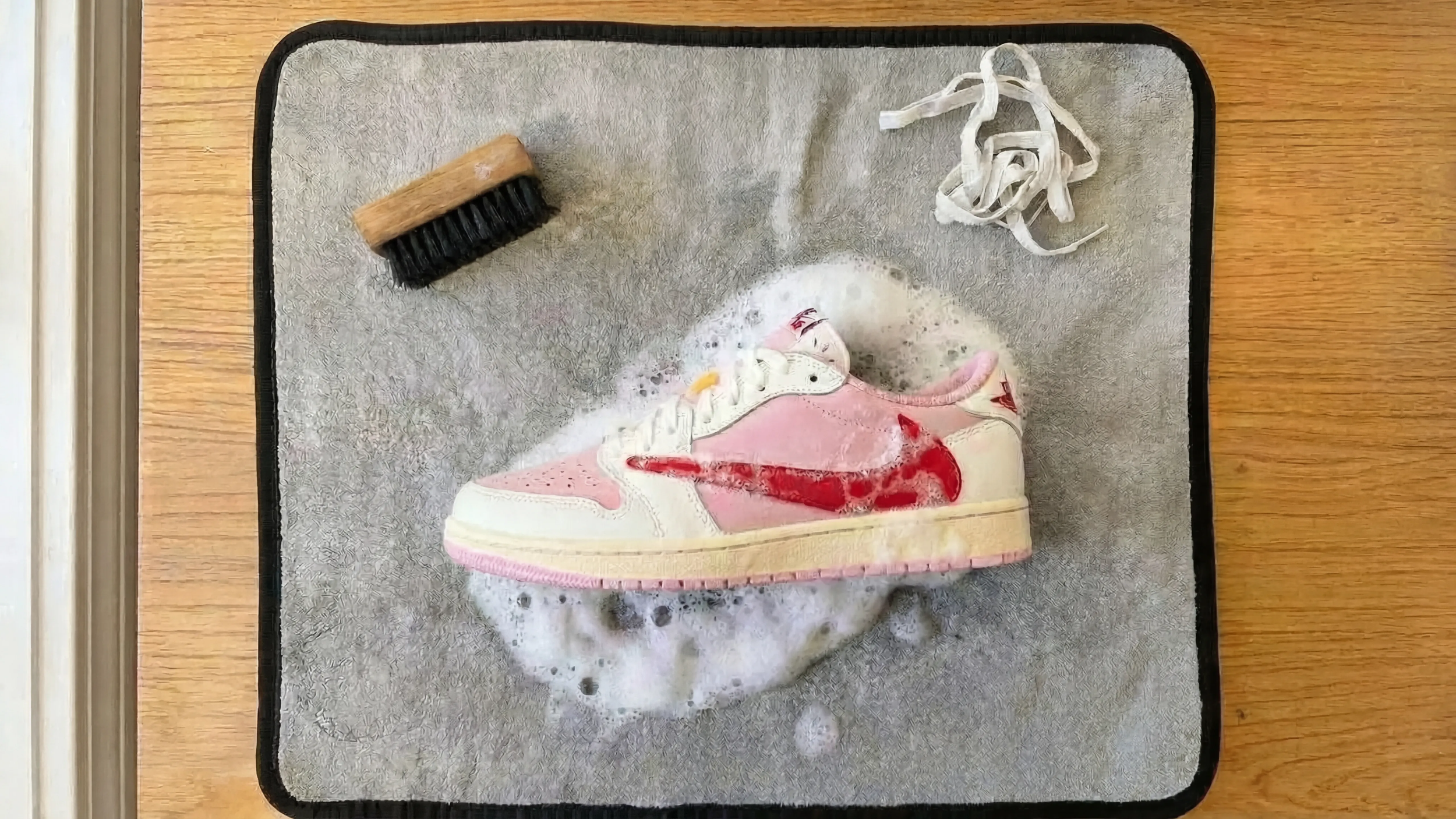
Searching for “sneaker cleaning near me” in New York City will bring up plenty of options, but not every sneaker-cleaning service offers the same level of care.
A basic cleaning may be enough for an everyday pair of sneakers, but valuable, delicate or heavily stained footwear requires more than soap and a brush. The cleaner must understand how different materials react to moisture, cleaning solutions, agitation and drying.
Before handing over your favorite Jordans, Yeezys, designer sneakers or everyday beaters, take a closer look at how the company works. The right questions can help you find a sneaker cleaner who will protect your shoes while delivering results that are worth paying for.
Use the checklist below to compare sneaker-cleaning services in NYC.
What to Look for When Searching for a Sneaker Cleaner Near You
The best sneaker cleaner is not necessarily the company with the lowest price or the closest address. Convenience matters, but it should not come at the expense of proper sneaker care.
A trustworthy sneaker-cleaning service should be transparent about its process, experience, turnaround time and policies. It should also be able to explain what can realistically be improved—and what cannot.
Here are seven factors to consider.
1. Are the Sneakers Cleaned by Hand?
Ask whether the sneakers are cleaned by hand or placed inside a washing machine.
Washing machines can expose sneakers to excessive water, heat, detergent and agitation. This may lead to separated glue, warped structures, damaged finishes, color bleeding or changes in the texture of delicate materials.
Hand-cleaning gives the cleaner more control. Different parts of the sneaker can be treated individually based on their material and condition. The upper, midsole, undersole, laces, lining and insole may each require different tools, cleaning solutions and levels of moisture.
Hand-cleaning is especially important for:
Suede and nubuck
Premium leather
Mesh and knit materials
Vintage sneakers
Designer sneakers
Hand-painted or customized footwear
Sneakers with weak glue or signs of aging
Question to ask: “Will my sneakers be cleaned entirely by hand?”
2. Does the Cleaner Understand Different Sneaker Materials?
Material knowledge is one of the biggest differences between a general shoe-cleaning service and an experienced sneaker-care specialist.
A method that works well on smooth leather may damage suede. Too much moisture can leave watermarks on nubuck. Aggressive brushing can cause knit or mesh to fray. Strong household chemicals may discolor fabric, weaken adhesives or remove protective finishes.
A knowledgeable sneaker cleaner should understand how to care for materials such as:
Leather
Suede
Nubuck
Canvas
Mesh
Knit
Patent leather
Rubber
Foam
Synthetic overlays
The cleaner should also recognize that many sneakers combine several materials in one design. A pair may have a leather upper, suede panels, mesh sections and a painted foam midsole. Each area may need to be cleaned separately.
Before booking, look for educational content on the company’s website or social media. A cleaner who regularly explains material care, stain treatment, oxidation and proper drying is more likely to understand the risks involved.
Question to ask: “Do you have experience cleaning this specific material and sneaker model?”
3. Can You See Real Before-and-After Work?
Before-and-after photos are one of the easiest ways to evaluate a sneaker cleaner’s work.
Look for examples that show the entire sneaker clearly rather than only close-up shots of one clean section. Ideally, the company should have results involving different materials, colors, brands and levels of wear.
Pay attention to more than bright white midsoles. Look at whether the cleaner was able to improve:
Dirt embedded in textured materials
Stains on uppers
Grime around stitching and seams
Dirty laces
Scuffed midsoles
Soiled undersoles
Interior buildup
Suede or nubuck appearance
Be cautious when every photo appears heavily filtered or photographed under completely different lighting. Lighting can make a sneaker look dramatically cleaner without accurately showing the result.
You should also be realistic about what before-and-after photos represent. Some stains, discoloration, scratches, oxidation and material damage cannot be completely reversed through cleaning alone. A reputable cleaner should not guarantee that every sneaker will return to brand-new condition.
Question to ask: “Can you show me results from a pair similar to mine?”
4. What Do Customer Reviews Say?
Reviews can reveal details that before-and-after photos cannot.
When evaluating an NYC sneaker cleaner, look beyond the overall star rating. Read what customers say about the complete experience, including communication, reliability, convenience and how the sneakers looked when they were returned.
Helpful reviews may mention:
The quality of the cleaning
Pickup and delivery reliability
Communication during the process
Whether the sneakers were returned on time
How the company handled difficult materials
Whether expectations were explained clearly
The condition of the sneakers when returned
Whether the customer would use the service again
A few negative reviews do not automatically mean you should avoid a company. Pay attention to how the business responds. A professional, thoughtful response can show that the company takes accountability and customer service seriously.
Look for reviews on independent platforms such as Google, not only testimonials posted on the cleaner’s own website.
Question to ask yourself: “Do the reviews consistently describe the type of experience I want?”
5. Is the Turnaround Time Clearly Explained?
Professional sneaker cleaning takes time. A cleaner may need to perform an inspection, remove the laces and insoles, clean separate materials, treat stains and allow the sneakers to dry properly before reassembly.
Extremely fast turnaround times can sound appealing, but faster is not always better. Rushing the drying process or using excessive heat may damage materials and adhesives.
Before booking, make sure you understand:
The estimated turnaround time
When the turnaround period begins
Whether pickup and delivery days are included
Whether stain treatment may require additional time
Whether restoration services take longer than standard cleaning
How delays will be communicated
You should also ask whether expedited service is available when you need a pair cleaned before a vacation, event, or special occasion.
A reliable cleaner should provide a realistic time frame rather than promising immediate results that may compromise the work.
Question to ask: “When should I expect my sneakers to be returned?”
6. Does the Service Offer Convenient Pickup or Drop-Off Options?
When searching for sneaker cleaning near me in NYC, location is only one part of convenience.
Traveling across the city to drop off and retrieve a pair of sneakers can turn a simple cleaning into a multi-hour task. Consider whether the service offers pickup and delivery, scheduled drop-offs or mail-in cleaning.
Depending on your needs, look for options such as:
Home pickup and delivery
Workplace pickup
Appointment-based drop-off
Local service in your borough
Nationwide mail-in cleaning
Clear pickup windows
Text or email appointment updates
Before scheduling a pickup, confirm the service area and whether transportation is included in the cleaning price. Some companies advertise pickup but charge additional fees based on location, order size or distance.
Weekend Ritual offers complimentary pickup and delivery in Manhattan, Brooklyn and Queens, allowing customers to have their sneakers professionally cleaned without traveling to a storefront. Mail-in service is also available for customers outside the local pickup area.
Question to ask: “Are pickup and delivery included, and do you service my neighborhood?”
7. What Is the Company’s Damage Policy?
Every sneaker-cleaning service should have clear terms explaining how preexisting damage, material defects and service-related issues are handled.
Sneakers may arrive with weak glue, cracking paint, loose stitching, dry materials, previous repairs or hidden structural problems. Vintage and heavily worn pairs can be especially unpredictable once they are exposed to moisture and movement.
Before booking, review the company’s policies regarding:
Preexisting damage
Color bleeding
Material fading
Glue separation
Vintage or fragile sneakers
Previous repair work
Lost or damaged items
Refunds or service credits
Claims and reporting deadlines
A professional cleaner should inspect the sneakers and document important concerns before beginning. The company should also contact you when it discovers a risk that may affect the service.
Be cautious of cleaners who promise that there is no possibility of damage. Even experienced professionals cannot eliminate every risk, especially when working with older or already compromised footwear.
Question to ask: “What happens if you discover damage or a high-risk area during the cleaning?”
Additional Questions to Ask an NYC Sneaker Cleaner
Before choosing a service, consider asking these additional questions:
Which cleaning service is appropriate for my sneakers?
Is stain removal included or priced separately?
Do you clean the undersoles?
Are the insoles and interior lining included?
Do you provide deodorizing or interior sanitation?
Can yellowed soles be treated through cleaning?
Are laces cleaned or replaced?
Will you contact me before performing additional services?
How should I prepare my sneakers for pickup or drop-off?
What payment methods do you accept?
The cleaner’s answers should be clear and specific. You should not feel pressured into purchasing the most expensive service without an explanation of why it is needed.
Understand the Difference Between Cleaning and Restoration
Cleaning and restoration are related, but they are not the same service.
Professional cleaning is intended to remove or reduce dirt, grime, stains, buildup and odor. Restoration may involve repainting, reglueing, sole de-yellowing, repairing damaged materials or replacing components.
Regular cleaning may not completely fix:
Permanent dye transfer
Deep scratches
Cracked leather
Peeling paint
Oxidized soles
Separated glue
Sun fading
Worn-down tread
Material loss
Some cleaners offer both cleaning and restoration, while others specialize in cleaning only. Make sure you understand which service you are purchasing and what outcome is realistic.
A trustworthy sneaker-care professional will explain when a pair needs more than a deep clean.
Should You Choose the Cheapest Sneaker Cleaner?
Price matters, but it should not be the only factor.
A lower-priced service may be appropriate for basic everyday sneakers that only need a light surface cleaning. More valuable or delicate sneakers may justify paying more for careful inspection, material-specific treatment and a detailed hand-cleaning process.
Pricing can vary based on:
Sneaker material
Level of dirt or staining
Interior cleaning
Undersole cleaning
Odor treatment
Yellowing or oxidation
Restoration needs
Pickup and delivery
Turnaround time
Instead of comparing only the starting price, compare what each service includes. One company’s “deep clean” may cover only the upper and midsole, while another may also include the laces, undersoles, insoles and interior lining.
The best value is the service that provides the appropriate level of care for your sneakers—not necessarily the lowest advertised price.
Why NYC Customers Choose Weekend Ritual
Weekend Ritual is a professional NYC sneaker-cleaning service built around convenience, careful hand-cleaning and material-specific sneaker care.
Every pair is evaluated individually rather than being placed through an automated cleaning process. Customers can choose from different service levels based on whether their sneakers need a surface cleaning, exterior deep cleaning or complete exterior and interior care.
Weekend Ritual also provides complimentary scheduled pickup and delivery throughout Manhattan, Brooklyn and Queens. Customers outside New York City can use the mail-in sneaker-cleaning service.
The goal is not to promise that every pair will look brand new. It is to provide honest expectations, detailed care and the best possible improvement based on the sneaker’s material, age and condition.
NYC Sneaker Cleaner Checklist
Before booking a sneaker-cleaning service, confirm the following:
☐ The sneakers will be cleaned by hand
☐ The cleaner has experience with your sneaker’s materials
☐ Real before-and-after results are available
☐ The company has detailed customer reviews
☐ The turnaround time is clearly explained
☐ Pickup, delivery or drop-off options fit your schedule
☐ The service inclusions are clearly listed
☐ The damage and liability policies are available
☐ The cleaner provides realistic expectations
☐ You know the total cost before the service begins
Choosing the right sneaker cleaner takes a little more research than selecting the first result that appears after searching for “sneaker cleaning near me.” Your sneakers may carry financial, personal or sentimental value, so it is worth choosing a company that understands how to care for them properly.
When you are ready to give your sneakers a second chance, Weekend Ritual makes professional sneaker cleaning convenient for customers across NYC.
How Much Does Sneaker Cleaning Cost in NYC?
How Much Does Professional Sneaker Cleaning Cost in NYC?
Professional sneaker cleaning in NYC typically costs between $30 and $90 or more per pair, depending on the condition of the sneakers, the materials being cleaned, and how much of the shoe needs attention. A light exterior cleaning will usually cost less than a full deep clean that includes the undersoles, interiors, odor treatment, stain removal, or restoration work.
At Weekend Ritual, professional sneaker cleaning starts at $30 per pair, with multiple service levels designed for everything from routine maintenance to complete exterior and interior care. Every pair is cleaned by hand, and customers in Manhattan, Brooklyn, and Queens can take advantage of free pickup and delivery.
What Is the Average Cost of Sneaker Cleaning in NYC?
Based on pricing offered by professional sneaker cleaners throughout New York City, most standard sneaker-cleaning services begin at approximately $30 to $50 per pair. More detailed cleanings, designer sneaker care, sole de-yellowing, and restoration services may cost $60 to $90 or more.
The final price is usually determined by more than how dirty the sneakers look. Two pairs may appear similar from a distance but require completely different levels of care.
For example, a leather sneaker with surface dirt may only need a basic cleaning. A suede sneaker with oil stains, dirty undersoles, interior odor, and yellowed soles may require several specialized treatments.
Understanding what goes into professional sneaker-cleaning pricing can help you choose the right service and avoid paying for treatments your sneakers do not need.
What Factors Affect Professional Sneaker-Cleaning Prices?
1. Sneaker Material
The material is one of the most important pricing factors.
Smooth leather and many synthetic materials are generally more straightforward to clean. Delicate or absorbent materials such as suede, nubuck, canvas, knit, mesh, satin, and premium leather require more controlled cleaning methods.
Using too much moisture, the wrong brush, or a harsh household cleaner can cause:
Color bleeding
Watermarks
Fading
Texture changes
Fraying
Permanent discoloration
Professional sneaker cleaners must adjust their products, tools, moisture levels, and techniques for each material. Mixed-material sneakers can require even more attention because every section of the shoe may react differently during the cleaning process.
At Weekend Ritual, sneakers are cleaned by hand using non-harsh cleaning products and methods selected for the sneaker’s construction and materials.
2. Surface Dirt Versus Deep-Set Stains
Not every dirty sneaker needs a deep clean.
Surface dust, light dirt, and minor midsole marks may be treatable with a basic service. Stains that have soaked into the material require more time and targeted treatment.
Common difficult stains include:
Oil and grease
Food and drink spills
Mud
Denim dye transfer
Grass stains
Salt and water marks
Ink
Old, untreated stains
The stain’s age also matters. A fresh stain is often easier to treat than one that has been sitting in the material for several months.
Professional cleaning can significantly improve many stains, but no responsible sneaker cleaner should guarantee that every stain will disappear completely. Some stains permanently alter the fibers, finish, or color of the material. Weekend Ritual evaluates tougher stains and explains any risks before proceeding.
3. Exterior Cleaning Coverage
“Sneaker cleaning” can mean different things depending on the provider.
Some lower-priced services only clean the upper and visible midsole. More complete exterior services may include:
Uppers
Midsoles
Laces
Lace accessories
Undersoles or outsoles
Cleaning the undersoles takes additional time because dirt, gum, gravel, and street grime can become packed into the tread. For New Yorkers who walk frequently or use public transportation, the bottoms of the shoes can require significantly more work than the visible upper.
Before booking, check exactly which parts of the sneaker are included in the advertised price.
4. Interior Sneaker Cleaning
The inside of a sneaker can hold sweat, bacteria, dirt, dead skin, and odor even when the exterior still looks relatively clean.
Interior cleaning may include:
Insoles
Interior lining
Heel area
Toe box interior
Interior sanitation
Deodorizing treatment
This level of care is especially useful for frequently worn sneakers, gym shoes, work sneakers, pre-owned pairs, and shoes with persistent odor.
Because interior cleaning requires additional time and careful moisture control, it usually costs more than an exterior-only service.
5. Sneaker Odor
Strong sneaker odor is not always solved by spraying fragrance inside the shoe.
Odor often returns because the source remains trapped in the insole, lining, and other interior materials. A more complete treatment may involve cleaning the interior, sanitizing the shoe, and applying a deodorizing treatment designed to neutralize odor instead of simply covering it.
For sneakers with recurring odor, choose a service that specifically includes interior care and deodorizing rather than a standard exterior cleaning.
6. Undersole Cleaning
Many basic sneaker-cleaning services do not include the bottoms of the shoes.
Undersole cleaning is more labor-intensive because the tread can trap:
Mud
Street debris
Gum
Grease
Gravel
Ground-in dirt
A detailed undersole cleaning improves the overall appearance of the pair and is particularly valuable when preparing sneakers for resale, storage, travel, or rotation back into a collection.
At Weekend Ritual, undersole cleaning is included in the Full Exterior Deep Clean and Full Exterior and Interior Deep Clean service levels.
7. Yellowing and Oxidation
Yellow soles are not always dirty soles.
White rubber and clear soles can gradually turn yellow because of oxidation, age, heat, sunlight, moisture, and storage conditions. Regular sneaker soap may remove surface dirt, but it will not reverse oxidation.
Yellowed soles usually require a separate restoration process known as:
Sole de-yellowing
Sole unyellowing
Sole de-oxidation
Re-icing
This specialized treatment is generally priced separately from standard sneaker cleaning. Weekend Ritual offers sole de-yellowing for both rubber and clear soles.
Results can vary depending on the age of the sneaker, the type of sole, previous treatments, and how deeply the oxidation has developed.
8. Restoration and Repair Needs
Cleaning removes dirt and treats stains. Restoration addresses physical wear or changes to the sneaker itself.
Restoration services may include:
Sole de-yellowing
Midsole repainting
Color touch-ups
Suede recoloring
Glue repair
Sole separation repair
Scuff repair
Heel-lining repair
Material repair
These services require additional labor, materials, curing time, and technical skill, so they can cost substantially more than a routine cleaning.
A severely worn sneaker may require both cleaning and restoration. A professional assessment can help determine whether restoration is worthwhile based on the sneaker’s condition, value, and sentimental importance.
Weekend Ritual’s Sneaker-Cleaning Prices
Weekend Ritual offers four professional sneaker-cleaning service levels in NYC.
Basic Clean — $30
The Basic Clean is designed for lightly worn sneakers that need routine maintenance.
It includes:
Light surface cleaning of the uppers
Light surface cleaning of the midsoles
The Basic Clean is best for sneakers with dust, light dirt, and minor surface marks. It is not intended for stain removal or deeply embedded dirt.
Deep Clean — $40
The Deep Clean is designed for sneakers with heavier dirt, visible marks, or stains that require more detailed attention.
It includes:
Detailed upper cleaning
Midsole cleaning
Stain and scuff treatment
Lace cleaning
This is a strong choice for most regularly worn sneakers that need more than a quick surface refresh.
Full Exterior Deep Clean — $55
The Full Exterior Deep Clean covers the sneaker from top to bottom.
It includes:
Detailed upper cleaning
Midsole cleaning
Stain and scuff treatment
Lace cleaning
Undersole deep cleaning
This service is ideal for heavily worn sneakers, pairs with dirty bottoms, sneakers being prepared for resale, or customers who want the entire exterior cleaned.
Full Exterior and Interior Deep Clean — $69
The Full Exterior and Interior Deep Clean is Weekend Ritual’s most comprehensive cleaning service.
It includes:
Detailed upper cleaning
Midsole cleaning
Stain and scuff treatment
Lace cleaning
Undersole deep cleaning
Interior sanitation
Deodorizing treatment
This service is recommended for sneakers with interior dirt, frequent wear, strong odor, dirty insoles or lining, or pairs that need a complete refresh. Current turnaround time is approximately four to seven days.
Which Sneaker-Cleaning Service Should You Choose?
Choose a Basic Clean when your sneakers only have light surface dirt and no significant stains.
Choose a Deep Clean when the uppers, midsoles, or laces have visible dirt, stains, or scuffs.
Choose a Full Exterior Deep Clean when you also want the bottoms of the sneakers thoroughly cleaned.
Choose a Full Exterior and Interior Deep Clean when the shoes have interior dirt, odor, heavy wear, or need complete top-to-bottom care.
Yellowed soles, paint damage, sole separation, discoloration, and other structural or cosmetic issues may require a separate restoration service.
When you are unsure which option is right, Weekend Ritual offers free sneaker-cleaning consultations.
Is Professional Sneaker Cleaning Worth the Cost?
Professional sneaker cleaning can be worth the investment when:
The sneakers are expensive or difficult to replace
The material is delicate
The stains are difficult to identify
You do not have the correct cleaning tools
The sneakers have interior odor
You want to preserve a collection
You are preparing the sneakers for resale
Previous DIY cleaning attempts did not work
You want to avoid damaging suede, mesh, leather, or glued components
Replacing a quality pair of sneakers can cost significantly more than professionally maintaining the pair you already own.
Professional care also saves time. Instead of buying multiple products, testing different techniques, and risking permanent damage, you can have the pair evaluated and cleaned according to its specific materials and condition.
How Long Does Professional Sneaker Cleaning Take?
Professional sneaker cleaning is not usually a same-day process.
The sneakers may need to be inspected, pretreated, cleaned in stages, dried naturally, detailed, deodorized, and checked before they are returned. Delicate materials and tougher stains may require additional treatment or drying time.
Weekend Ritual’s standard turnaround time is approximately four to seven days, depending on the service and condition of the sneakers.
Convenient Sneaker Cleaning in Manhattan, Brooklyn, and Queens
Weekend Ritual makes professional sneaker care convenient with free pickup and delivery in parts of Manhattan, Brooklyn, and Queens.
The process is simple:
Choose your sneaker-cleaning service.
Schedule a pickup time.
Weekend Ritual collects your sneakers.
Each pair is cleaned by hand.
You receive before-and-after photos when the cleaning is complete.
Schedule the return delivery of your clean sneakers.
Customers outside the NYC pickup area can also use Weekend Ritual’s nationwide mail-in sneaker-cleaning service.
Book Professional Sneaker Cleaning in NYC
Your sneakers do not always need to be replaced. Sometimes they simply need the right care.
Whether your pair needs a surface refresh, stain treatment, undersole cleaning, interior sanitation, odor removal, or sole de-yellowing, Weekend Ritual will help you choose the appropriate service for its condition.
Schedule your Weekend Ritual sneaker pickup today and give your sneakers a second chance.
Live your life. We’ll clean your kicks.
How to Keep Your Sneakers Fresh All Summer Long

Beat the heat. Save your sneakers.
Summer is all about rooftop hangs, beach trips, and long city strolls—but it’s also the season where your sneakers take the biggest beating. From sweaty insoles to unexpected BBQ stains, your kicks need extra care to stay fresh all season.
Here’s your go-to guide for summer sneaker care so you can flex with confidence, not funky odors.
1. Rotate Your Sneakers
Wearing the same pair every day? That’s a fast track to sweaty sneaker odor. Let your kicks breathe between wears by rotating through 2–3 pairs. It gives the materials time to air out and reduces long-term damage.
2. Use Odor-Fighting Insoles or Sprays
Invest in sneaker sprays or activated charcoal insoles. They help combat the stink caused by summer sweat and keep your sneakers smelling clean even after a long day in the sun.
Pro Tip: Avoid strong chemical sprays—go for natural, sneaker-safe deodorizers.
3. Air Them Out After Every Wear
When you get home, take out the insoles and loosen the laces. Letting your sneakers air-dry overnight is a simple but powerful sneaker maintenance tip to keep bacteria and odor in check.
4. Avoid Letting Stains Set
Dropped a drink? Caught in a dusty park? Spot clean your kicks as soon as you can. Summer messes become permanent if you let them sit too long.
Materials like suede and mesh need extra TLC, so use soft brushes and sneaker-safe cleaners to prevent damage.
5. Schedule Regular Deep Cleanings
A wipe-down won’t cut it forever. Book a professional cleaning every few weeks—especially if you’re rocking expensive pairs or limited-edition heat.
At Weekend Ritual, we clean sneakers by hand, tackle sweaty sneaker odor at the source, and offer free pick-up and delivery in NYC. It’s sneaker care made easy.
Summer Sneaker Survival Checklist:
✅ Rotate pairs
✅ Use odor protection
✅ Air out nightly
✅ Clean stains early
✅ Deep clean monthly
Keep It Fresh, All Season Long
Summer should smell like sunscreen and fresh air—not funky sneakers. Whether you’re heading to a rooftop party or running errands, clean kicks complete the fit.
Need help keeping your sneakers in top shape?
[Book your summer sneaker cleaning with Weekend Ritual now →]
Essential Tips to Keep Your Sneakers Fresh This Winter

Winter is on the way, and while we all love the cozy vibes and festive season, our sneakers can take a hit from the cold, wet weather. Keeping your kicks fresh and clean during winter can be challenging with all the mud, snow, and moisture. But don’t worry! With the right care, you can keep your sneakers looking brand new all season long. Here are some essential tips to help you maintain your sneakers this winter.
1. Choose Winter-Friendly Materials
Some sneaker materials hold up better than others in winter. Leather, synthetic leather, and water-resistant materials are generally more winter-friendly than canvas or suede. If you must wear suede, consider applying a water-repellent spray designed for suede to protect your sneakers from water and snow damage.
Pro Tip: Look for sneakers with a rubber sole for extra grip on slippery surfaces.
2. Invest in a Good Water-Repellent Spray
A high-quality water-repellent spray is a must-have for sneaker lovers during winter. A protective spray acts as a barrier against water, snow, and dirt, helping your sneakers stay clean and dry. Be sure to apply the spray every few weeks or after heavy exposure to wet conditions.
Pro Tip: For maximum protection, always follow the product instructions and reapply as needed. This will ensure your sneakers stay in top shape throughout the winter.
3. Clean Mud and Salt Off Immediately
Mud, salt, and slush can damage sneakers if left unchecked. As soon as you notice dirt or salt on your sneakers, clean them off to prevent permanent stains and wear. A simple solution of warm water and mild soap works well for most materials. For suede or nubuck, use a soft brush specifically designed for these materials to avoid damage.
Pro Tip: Use an old toothbrush for those tricky crevices.
4. Dry Sneakers Properly
One of the worst things for sneakers is letting them stay wet for too long. Avoid putting sneakers directly on radiators or heaters, as high heat can damage the materials. Instead, use a microfiber towel to help absorb moisture and let them air dry in a well-ventilated area.
Pro Tip: Stuffing shoes with a microfiber towel not only speeds up drying, but also helps prevent odors by absorbing moisture.
5. Keep an Odor Eliminator on Hand
Damp conditions often lead to odor, but a good sneaker deodorizer can keep smells at bay. Look for products made specifically for athletic shoes, as these are designed to neutralize bacteria-causing odors without damaging materials.
Pro Tip: Natural alternatives like baking soda or tea bags can work as quick fixes. Just leave them in your shoes overnight!
6. Store Sneakers Properly Between Wears
If you’re not planning on wearing a pair of sneakers for a while, store them in a cool, dry place away from direct sunlight and moisture. Use shoe bags or boxes to keep dust and dirt at bay. For an extra layer of protection, insert shoe trees to help maintain shape.
7. Consider Professional Cleaning Services
Winter is the ideal time to invest in professional sneaker cleaning services, especially if you have premium or limited-edition sneakers. Professionals can handle deep cleaning, stain removal, and conditioning to keep your sneakers looking fresh. A reputable sneaker cleaning service will ensure your shoes are returned in like-new condition, ready to tackle whatever winter throws at them!
The Do's and Don'ts of Sneaker Cleaning: Common Mistakes to Avoid
There are common mistakes that many people make when cleaning their sneakers, which can lead to damage rather than restoration. In this guide, we'll explore the do's and don'ts of sneaker cleaning to help you keep your favorite pairs pristine.
The Do's:
1. Do Use the Right Tools and Products:
Invest in a good quality sneaker cleaning kit that includes a soft-bristled brush, mild detergent or specialized sneaker cleaner, and a microfiber cloth.
Use a soft brush to gently scrub away dirt and stains without causing damage to the material.
2. Do Spot Test:
Before cleaning the entire shoe, spot-test the cleaning solution on a small, inconspicuous area to ensure it doesn't cause discoloration or damage.
3. Do Clean Regularly:
Regular maintenance is key to keeping sneakers looking fresh. Clean them after each wear, especially if they're exposed to dirt or mud.
4. Do Air Dry:
Allow your sneakers to air dry naturally after cleaning. Avoid putting them in the dryer or using direct heat, as this can cause damage to the materials.
5. Do Store Properly:
Store your sneakers in a cool, dry place away from direct sunlight when not in use. This helps prevent discoloration and deterioration of materials.
The Don'ts:
1. Don't Use Harsh Chemicals:
Avoid using bleach, strong detergents, or household cleaning products, as they can damage the fabric or finish of your sneakers.
2. Don't Soak in Water:
While it's essential to clean your sneakers, avoid soaking them in water for extended periods, especially if they're made of materials like suede or leather, as it can cause damage and deformation.
3. Don't Use Excessive Force:
Scrubbing too vigorously can damage the material of your sneakers, especially if they're made of delicate fabrics like suede or knit. Use gentle, circular motions when cleaning.
4. Don't Forget to Protect:
Consider applying water and stain-repellent spray to your sneakers after cleaning to provide an extra layer of protection against future spills and stains.
5. Don't Neglect the Soles:
Don't overlook cleaning the soles of your sneakers. Use a separate brush or sponge to scrub away dirt and grime from the outsole to maintain traction and prevent tracking dirt indoors.
Spotlight on Sneaker Materials: Cleaning Tips for Suede Sneakers
Suede sneakers have become a staple in the world of fashion, offering a luxurious and stylish alternative to traditional leather or canvas options. However, keeping these kicks clean and pristine can be a challenge, especially with the delicate nature of suede. Fear not! Our sneaker cleaning service is here to provide you with expert tips on maintaining the allure of your suede sneakers. Let's dive into the intricacies of suede and unveil the secrets to keeping them spotless.
Understanding Suede:
Suede is a type of leather with a soft and napped finish, crafted from the underside of animal hides. While it imparts a velvety texture to sneakers, it is highly susceptible to stains, scuffs, and water damage. Proper care is essential to ensure your suede sneakers maintain their aesthetic appeal.
Preventive Measures:
Waterproofing: Begin by applying a suede protector spray before wearing your sneakers. This acts as a barrier against water and stains, reducing the likelihood of permanent damage. Repeat this process every few weeks for optimal protection.
Avoiding Wet Conditions: Suede and water are not the best of friends. Whenever possible, avoid wearing suede sneakers in wet conditions. If caught in the rain, let your sneakers air-dry naturally instead of using heat sources, which can cause the material to lose its texture.
Cleaning Techniques:
Brushing: Invest in a soft-bristled suede brush to gently remove surface dirt and revive the nap. Brush in one direction to maintain the suede's original texture. For stubborn stains, a small amount of white vinegar on the brush can be effective.
Eraser Method: For scuff marks and light stains, use a suede eraser or a standard pencil eraser. Gently rub the affected area to lift the stain. Remember to brush the area afterward to restore the suede's texture.
Steam Cleaning: Steam is a gentle yet effective way to remove tough stains from suede. Hold the sneakers over steam, being cautious not to get them too wet. Once the stains have softened, use a suede brush to restore the texture.
Professional Cleaning:
Despite your best efforts, some stains may prove challenging to remove at home. In such cases, entrust your suede sneakers to professional sneaker cleaning services. Professionals have the expertise and tools to tackle even the most stubborn stains, ensuring your suede sneakers look as good as new.