
Sneaker Cleaning vs Restoration: Which Service Does Your Pair Need?
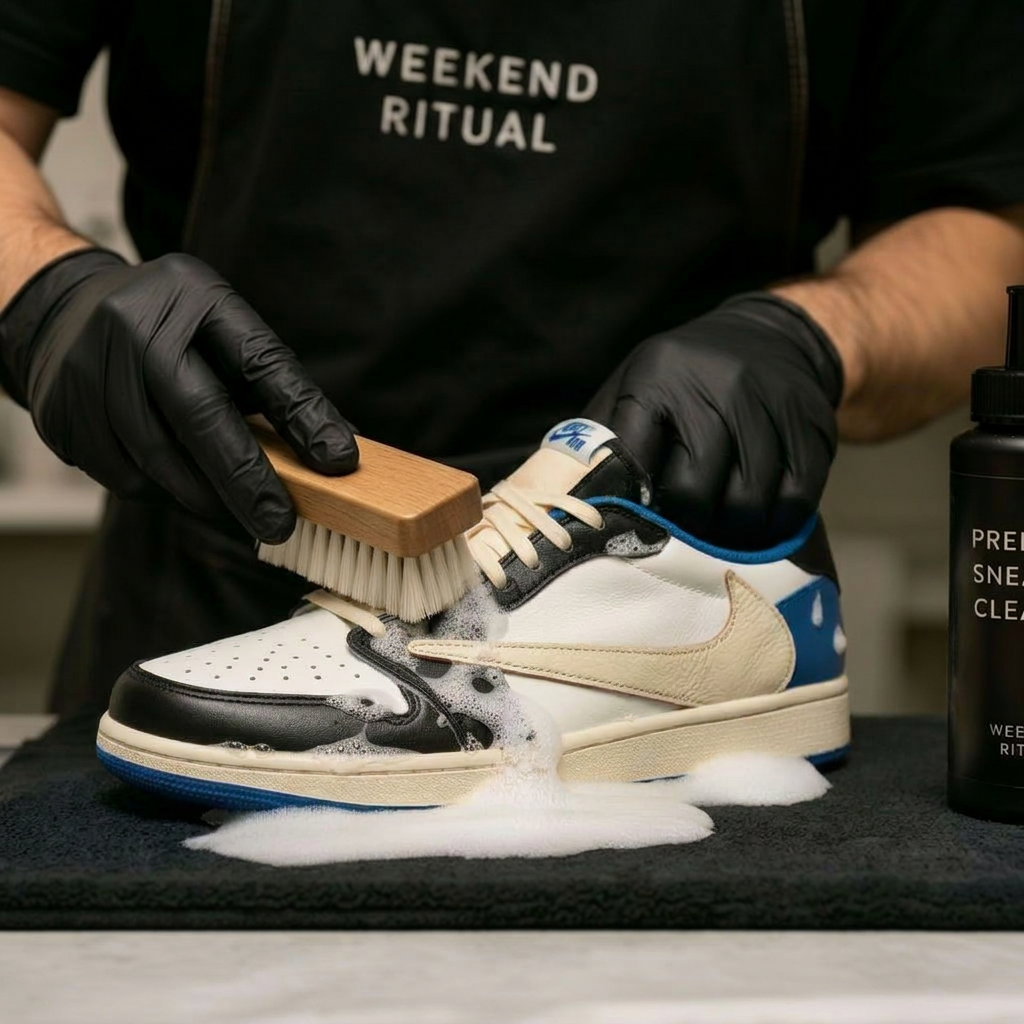
When your sneakers are dirty, stained, yellowed, faded, or simply looking worn, it can be difficult to know what service they actually need. Understanding sneaker cleaning vs restoration can help you avoid paying for unnecessary work—or expecting a standard cleaning to correct damage that requires a more advanced repair.
At Weekend Ritual, we work with sneakers in a wide range of conditions, from lightly worn everyday pairs to heavily used sneakers that need more than soap, water, and stain treatment. One of the most important parts of professional sneaker care is knowing the difference between something that is dirty and something that is actually damaged.
Cleaning is primarily about removing contaminants and improving the appearance of the materials already there. Restoration involves repairing, replacing, repainting, or correcting parts of the sneaker that have deteriorated.
Here’s how to tell which service your pair needs.
Sneaker Cleaning vs Restoration: What’s the Difference?
The simplest difference is this:
Sneaker cleaning removes dirt, stains, grime, and odor. Sneaker restoration repairs or corrects damage, deterioration, discoloration, or missing material.
A sneaker can look dramatically different after a professional cleaning, but cleaning has limits. If paint has worn away, a sole is separating, leather is cracked, or a material has permanently changed color, removing dirt alone will not return the sneaker to its original condition.
That is where restoration comes in.
What Professional Sneaker Cleaning Can Fix
Professional sneaker cleaning focuses on safely removing grime buildup without unnecessarily altering the sneaker's original materials.
Depending on the sneaker and service level, cleaning can include the upper, midsoles, laces, undersoles, insoles, interior lining, and other areas of the shoe.
Dirt and Surface Grime
Everyday dirt is one of the most common issues we see.
Dust, sidewalk grime, mud, spills, and general wear can gradually dull a sneaker's appearance. White midsoles can turn gray, textured uppers can collect dirt, and outsole grooves can fill with debris.
In most cases, these problems require cleaning rather than restoration.
Example: A pair of white leather Air Force 1s has dirty uppers, gray midsoles, and stained laces, but the leather and paint are still intact.
What it needs: A professional deep cleaning.
Stain Treatment
Some sneakers are technically clean but still have visible stains.
Stain treatment goes beyond basic surface cleaning and targets discoloration caused by substances such as mud, food, beverages, oils, or other contaminants.
The type of material matters significantly. A stain on leather may require a completely different process than the same stain on mesh, suede, knit, or nubuck.
Professional stain treatment should always prioritize the integrity of the material. Aggressively scrubbing a stain or using strong household chemicals can sometimes cause more damage than the original stain.
Example: A mesh running sneaker has a dark stain across the toe box, but the material itself has not torn or faded.
What it needs: Deep cleaning with targeted stain treatment.
Interior Cleaning and Odor Removal
Sweat, bacteria, dirt, and repeated wear can also affect the inside of a sneaker.
Exterior cleaning alone may make a pair look better without addressing odor or interior buildup. A more comprehensive cleaning can include the insoles, interior lining, and deodorizing treatment.
This is still considered sneaker cleaning because no damaged components are being rebuilt or replaced.
When Sneaker Cleaning Is Enough
Cleaning is usually the right choice when the sneaker is structurally sound and the original materials are still intact.
Your sneakers likely need cleaning if:
The uppers are dirty but not damaged.
The midsoles have surface grime.
The laces are stained.
Dirt is embedded in mesh or textured materials.
Suede or nubuck looks dirty or matted but is not severely damaged.
The undersoles have accumulated dirt.
The interior needs cleaning or deodorizing.
Stains are sitting on top of otherwise healthy material.
A good rule of thumb is that if the problem was caused by something being added to the sneaker—dirt, mud, grime, spills, or odor—cleaning may be enough.
If something has been lost or damaged—paint, adhesive, material, shape, or structure—restoration may be necessary.
What Is Sneaker Restoration?
Sneaker restoration involves correcting issues that cannot be solved through cleaning alone.
Depending on the condition of the sneaker, restoration may include repainting, sole repair, de-yellowing, material correction, adhesive work, or structural repairs.
Restoration can range from a relatively small cosmetic correction to a highly detailed rebuild of an older or badly damaged pair.
Repainting and Color Restoration
One of the clearest examples of the difference between sneaker cleaning and restoration is worn paint.
Cleaning can remove dirt sitting on top of paint. It cannot replace paint that is no longer there.
Painted midsoles and leather panels can eventually become scratched, chipped, faded, or worn through normal use.
Example: A pair of Jordan 4s has been cleaned thoroughly, but sections of black midsole paint are chipped away and the original surface underneath is visible.
What it needs: Repainting or paint restoration.
Before repainting, the sneaker generally needs to be properly cleaned and prepared so the new finish can adhere correctly.
This is why cleaning is often part of the restoration process, even though the two services are not the same.
De-Yellowing
Yellowing is another area where customers sometimes expect more from traditional sneaker cleaning than it can realistically provide.
Certain clear or translucent sneaker components can yellow over time because of oxidation, UV exposure, age, heat, and environmental conditions.
A standard cleaning can remove dirt sitting on the surface, but it cannot always reverse chemical discoloration within the material itself.
That requires a specialized de-yellowing or oxidation treatment.
Example: A pair of Jordan 11 Concords has clean translucent soles, but the soles remain noticeably yellow after the dirt has been removed.
What it needs: De-yellowing rather than additional scrubbing.
It is also important to recognize that de-yellowing results can vary depending on the sneaker's age, material, previous treatments, and level of oxidation. Professional sneaker care should never promise that every aged sole can be returned to factory-new transparency.
Sole Repair and Separation
If your sole is separating from the upper, cleaning will not solve the problem.
Sole separation can happen because of age, repeated wear, heat exposure, moisture, or deterioration of the original factory adhesive.
Depending on the sneaker and extent of the damage, restoration may involve removing deteriorated adhesive, preparing the surfaces, applying appropriate replacement adhesive, and carefully bonding the sneaker back together.
Example: An older pair of Jordans looks relatively clean, but the midsole begins pulling away from the upper near the toe.
What it needs: Sole repair or regluing.
Continuing to wear a separating sneaker can sometimes make the damage worse, so structural problems should be addressed before worrying about cosmetic cleaning.
Structural Sneaker Restoration
Structural restoration is usually the most advanced category of sneaker repair.
This can include problems such as:
Major sole separation
Damaged or deteriorating midsoles
Torn materials
Detached panels
Broken or missing components
Severe cracking
Foam deterioration
Damage caused by age or improper storage
Vintage sneakers can be particularly challenging because the sneaker may appear wearable while internal materials have already begun to deteriorate.
A sneaker that is 15 or 20 years old may therefore need to be evaluated differently from a current pair with similar visible wear.
Cleaning vs Restoration Examples
Here are a few common scenarios.
Dirty White Leather Sneakers
Condition: Dirt on the upper, gray midsoles, dirty laces, light scuffing.
Service: Cleaning.
If the leather coating and midsole paint remain intact, a deep cleaning may dramatically improve the appearance without restoration.
Heavily Stained Mesh Sneakers
Condition: Dirt and stains embedded throughout a light-colored mesh upper.
Service: Deep cleaning and stain treatment.
Because the original material remains intact, restoration usually isn't necessary unless the staining has permanently altered the material.
Chipped Jordan Midsole Paint
Condition: The sneaker is clean, but painted areas of the midsole are peeling or missing.
Service: Restoration.
Cleaning may be performed first, but repainting is required to replace the missing finish.
Yellowed Icy Soles
Condition: The outsole has been thoroughly cleaned but remains yellow.
Service: De-yellowing.
The problem is oxidation rather than surface dirt.
Separating Vintage Sneakers
Condition: The sneaker looks relatively clean, but the sole is pulling away from the upper.
Service: Structural restoration or sole repair.
Cleaning alone cannot repair weakened adhesive or deteriorated components.
Dirty Suede Sneakers
Condition: Suede looks darker, dusty, and matted, but there are no tears or major areas of permanent fading.
Service: Professional cleaning.
Suede requires controlled moisture, softer tools, and material-specific techniques, but it does not automatically require restoration simply because it looks worn.
Can a Sneaker Need Both Cleaning and Restoration?
Absolutely.
In fact, many restoration projects begin with a thorough cleaning.
Imagine a pair of older Jordans with dirty uppers, stained laces, yellowed soles, and chipped midsole paint.
That sneaker may require:
Deep cleaning
Stain treatment
De-yellowing
Midsole repainting
Cleaning prepares the sneaker and reveals what damage remains once the dirt is removed.
This is one reason Weekend Ritual recommends evaluating the actual condition of the sneaker before deciding what service it needs. What appears to be permanent damage can sometimes disappear during cleaning, while what initially looks like dirt may reveal itself to be fading, oxidation, paint loss, or material deterioration.
Why Proper Diagnosis Matters
Choosing between sneaker cleaning and restoration is about more than price.
It is also about protecting the sneaker.
Trying to scrub away missing paint can damage the surrounding finish. Attempting to remove oxidation with increasingly aggressive cleaners may damage the material. Painting over a dirty sneaker can lead to poor adhesion and an uneven finish.
Professional sneaker care requires knowing when to keep cleaning—and when to stop.
At Weekend Ritual, that distinction is an important part of our process. Different materials, stains, sneaker constructions, and ages require different approaches. The goal should always be to use the least aggressive process necessary to achieve the best realistic result.
Is Sneaker Restoration Always Worth It?
Not necessarily.
Restoration makes the most sense when the sneaker has monetary value, sentimental value, collectible value, or simply means enough to you that extending its life is worthwhile.
For an inexpensive everyday sneaker with extensive structural damage, replacing the pair may sometimes make more financial sense.
For rare sneakers, discontinued releases, sentimental pairs, or expensive designer sneakers, restoration may be much easier to justify.
A reputable sneaker-care professional should be willing to explain what can realistically be improved before major restoration work begins.
How to Decide What Your Sneakers Need
Before booking a service, look closely at what is actually wrong with the sneaker.
Ask yourself:
Is something dirty, or is something damaged?
If dirt, stains, grime, odor, or normal buildup are the primary problem, start with sneaker cleaning.
If paint is missing, soles are separating, materials are deteriorating, or oxidation has permanently changed the appearance of the sneaker, restoration may be necessary.
And if you're unsure, getting the pair evaluated before selecting a service is usually the safest option.
Professional Sneaker Cleaning in NYC
Weekend Ritual provides professional sneaker cleaning for customers throughout NYC, with a focus on careful hand-cleaning and material-specific sneaker care.
From everyday sneakers to Jordans, Yeezys, designer sneakers, suede, leather, mesh, and other specialty materials, every pair should be treated according to its construction and condition rather than using the same cleaning process for everything.
If your sneakers are dirty but structurally intact, explore our professional sneaker cleaning services in NYC to find the appropriate level of care for your pair.
If you believe your sneakers may need repainting, de-yellowing, sole repair, or another corrective treatment, contact Weekend Ritual before booking so the condition of the sneaker can be evaluated.
Live your life. We’ll clean your kicks.